
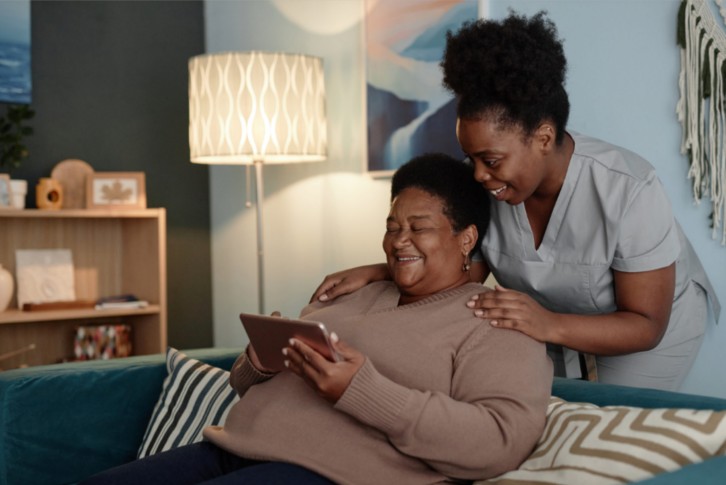
You’re not really asking home care vs. care home, by the way.
You’re asking: “How do I keep Mum safe without blowing up her life—or mine?” And you’re hoping there’s a clean answer where nobody feels guilty, nobody gets hurt, and your loved one doesn’t look at you like you’ve betrayed them.
Sometimes home care is the kind choice. Sometimes it’s the fantasy option people cling to because the alternative sounds like a Victorian orphanage. And sometimes a care home is the first place someone actually starts eating properly, sleeping properly, and getting their meds on time.
Let’s talk about what each option looks like in real life. Not brochure-life.
Home Care At Home: The Appeal, The Pitfalls, And What Good Looks Like
Home care (domiciliary care) wins on one big thing: familiarity. Same kettle. Same creaky stair. Same chair nobody else is allowed to sit in. That stuff matters—especially when someone’s anxious, grieving their independence, or living with memory problems.
But here’s the bit families find out the hard way: “We’ll get a carer in” isn’t one decision. It’s a chain of decisions. How many visits? At what times? Who holds the spare key? Who notices the milk’s gone off? Who deals with the GP, the prescriptions, the hospital letters, the fall that “was nothing” but somehow becomes a fracture six weeks later?
Good home care feels calm. It’s planned. It’s consistent. You’ve got a routine that actually matches how your loved one lives—morning wash, meds, meals, companionship, light housekeeping, help getting to appointments. And you’re not guessing; you’re getting updates.
Bad home care feels like a rotating cast sprinting through a checklist while your loved one sits there, confused and embarrassed. Fifteen-minute calls. Different faces. Missed little details that turn into big problems.
If you’re at the “are we even there yet?” stage, read our piece on when to hire a carer—because most people wait until they’re running on fumes and snapping at everyone.
Care Homes: The Structure You Pay For (And The Compromises You Swallow)
Care homes win on one big thing: coverage. There’s always someone around. Not “someone will be here at 6pm unless traffic is awful.” Someone. Around.
That matters when nights are messy, when falls are frequent, when someone’s unsafe with the cooker, or when medication needs have become a full-time job. A decent care home also brings structure—regular meals, fluids, staff watching patterns, and a baseline level of social contact that a lonely house just can’t compete with.
And yes, there are compromises. Big ones. Your loved one is living in an institution. Call it “a lovely community” if you want; it’s still a building that runs on routines and staffing. They may have to eat at set times. They may have to wait for help. Their privacy changes overnight. And for some people—proud people, private people, people who’ve spent 60 years running their own home—that loss lands like a punch.
So you vet hard.
You look at staffing, not wallpaper. You watch how staff speak to residents when they think nobody’s judging. You ask what happens at 2am when someone’s distressed. You look for warmth, patience, and basic competence—because “activities” don’t matter if nobody’s helping residents drink enough water.
Safety And Clinical Needs: When “Staying At Home” Stops Being Kind
Home is only “best” when it’s safe enough. Not perfect. Safe enough.
A few red flags that should make you pause—properly pause:
-
Frequent falls or near-falls. One bad slip and everything changes.
-
Night-time needs. Toileting, wandering, agitation, calling out—nights are where families break.
-
Medication complexity. If there are lots of tablets, timings, insulin, pain meds, blood thinners… mistakes get expensive.
-
Dementia-related risk. Leaving the house, turning on taps, forgetting pans, paranoia, refusing care.
-
Carer refusal. If your loved one won’t let anyone in, home care can become a daily battle.
Now, some of this can be managed at home with the right package—especially if you scale up care or bring in overnight support. But there’s a line where “home” becomes the place where danger hides in plain sight. And families often pretend that line doesn’t exist because the alternative feels emotionally brutal.
Costs And Paperwork: The Bill Isn’t Only Money
People fixate on the visible cost—hourly care at home vs weekly care home fees—and ignore the hidden bill.
With home care, the hidden bill is management. Someone has to coordinate visits, handle cancellations, chase prescriptions, sort equipment, speak to district nurses, deal with hospital discharge chaos, and spot early signs that things are sliding. If that “someone” is you, congrats: you’ve just taken on a part-time job you didn’t apply for.
With care homes, the hidden bill is loss of control. You’re not running the day. You’re trusting strangers with the details. You can advocate, visit, monitor, complain when needed—but you’re not there.
Money-wise, there’s no universal answer because needs change. “A bit of help” can turn into multiple daily calls. A “simple” care home stay can shift to nursing needs. Funding rules and assessments matter, but they’re a rabbit hole—so if you’re trying to understand the official side without frying your brain, start with our guide to funding and paying for care.
Family Burnout, Guilt, And The Quiet Damage To Relationships
Home care can protect relationships—or wreck them. Same with care homes.
If you keep someone at home and the family ends up doing all the emotional labour (plus nights, plus personal care, plus constant worry), you can start resenting the person you’re trying to help. That’s the ugly truth people don’t say out loud at dinner parties. It’s not because you’re a bad son or daughter. It’s because you’re human.
Care homes can ease that pressure. You get to be family again, not a stressed-out project manager with a laundry basket and a pill organiser. But it can also come with a different ache: visiting, leaving, driving home, feeling like you’ve abandoned them—even when you haven’t.
Respite care sits in the middle. Sometimes it’s the only way to get a clear head and make a decision that isn’t fuelled by panic and sleep deprivation.
A Blunt Decision Checklist: Signs Home Care Will Work—And Signs It Won’t
Here’s the framework I trust because it’s boring and practical.
Home care usually works better when…
-
Your loved one is still fairly steady (with support) and the home setup isn’t a hazard zone.
-
They want to stay home and will accept help without a daily argument.
-
Family can support without collapsing—not “we’ll manage somehow,” but “we have an actual plan.”
-
There’s consistency available (same carers regularly, clear routines, good communication).
-
Nights are mostly settled and risks are manageable with alarms, equipment, and proper oversight.
A care home often becomes the better option when…
-
Nights are unsafe or relentless. This is the turning point for a lot of families.
-
Care needs are high and constant (mobility, continence, double-handed care, pressure sore prevention).
-
Dementia risks are escalating—wandering, confusion, unsafe behaviours, frequent distress.
-
Home has become isolated. If days are silent and lonely, “staying put” can be its own kind of harm.
-
Family life is getting wrecked. Marriages strained, work suffering, kids seeing constant stress, everyone snapping.
If reading that makes you wince, good. That’s your brain recognising reality.
How To Test The Choice Before You Torch Your Savings (Or Your Sanity)
You don’t have to gamble everything on one big move.
Trial home care for a few weeks with honest tracking—sleep, meds, falls, mood, appetite, stress levels. If dementia is part of the picture, skim our dementia basics again and watch for the patterns people miss (sundowning, paranoia, refusal that’s actually fear).
And if a care home is on the table, consider respite or a short stay first. Not as a trick. As a test.
Because the “best” option isn’t the one that sounds nicest in theory. It’s the one that keeps your loved one safe, treated like a person, and living a life that still feels like theirs—even if the setting changes.